
Google has officially launched Gemini 4 Argon to the public following a previous restricted release to certain testing partners. This marks the debut of the first model in Google’s Gemini 4 series, which now holds a prominent position in Google’s product range.
Google CEO Sundar Pichai revealed on X that the model would be accessible worldwide beginning today.
Google introduced Argon on September 30 through a blog post by Koray Kavukcuoglu, SVP of Google DeepMind. Initially available to select cyber defenders in Google’s Fairwind Program, it is now accessible to Google AI Pro and Ultra subscribers via the Gemini app.
Google states that Argon is designed for extensive and intricate tasks in software engineering, enterprise knowledge work such as legal and finance, and cybersecurity defense. It is more direct and concise for everyday interactions while providing frequent progress updates for longer tasks. The release of Argon 4 coincides with a period of active developments in advanced AI models from various companies.
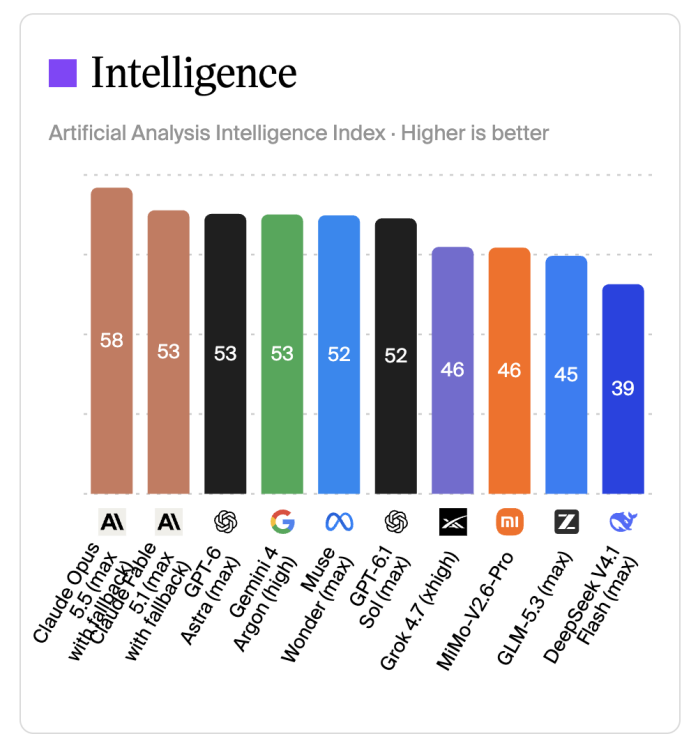
Google’s evaluation indicates that Argon outperforms its competitors in various benchmarks, tying with GPT-6 Astra on the independent Artificial Analysis Intelligence Index with high reasoning capabilities. It ranks slightly higher than GPT-6.1 Sol and the new Muse Wonder Max, but falls behind Claude Opus 5.5 and Claude Sonnet 5.5 by around five points on the same index.
Google’s main emphasis in the latest update is on coding. The update integrates Google Antigravity’s coding interface into the Gemini app on macOS, where Argon is already used extensively for internal engineering tasks.
Sign up today for Mashable’s Top Stories and Deals newsletters to discover how to maximize your technology’s potential.
How to test Google Gemini Argon 4.
Google AI Pro and Ultra subscribers now have access to Gemini 4 Argon in the Gemini app. The Pro subscription is priced at $19.99 per month, while the Ultra plan, introduced at I/O 2026, costs $100 a month with the top tier reduced from $250 to $200 per month.
Google established a starting price for the Argon API.
- $2 for every million input tokens
- $10 for every million output tokens
- Cached input tokens are available at a discounted rate of 95%, costing $0.10 per million.
$2 for every one million input tokens
$10 for every million output tokens
Cached input tokens are available at a discounted rate of 95%, costing $0.10 per million.
Anthropic’s Claude Opus 5.5 is priced lower than its main competitors. The announcement today mainly covers the Gemini app and does not mention any expansion of API access beyond Google’s initial rollout.
The update includes various modifications to the Gemini app. Antigravity’s coding interface is now integrated within the Gemini app on macOS, enabling users to seamlessly switch between chatting and coding. Additionally, a new toggle in the main chat window allows users to switch Gemini from chat to tasks mode, enabling continued functionality across Google apps and other services even when away from the computer. Access to this feature is available for Pro and Ultra subscribers.
Gemini now integrates with over 40 applications such as Instacart, OpenTable, Adobe, and Shopify, enabling tasks like grocery shopping, restaurant reservations, and e-commerce development.
Google Gemini Argon 4: Performance evaluation
Google’s comparison chart includes 18 outcomes, with Argon leading in 14, sharing the top spot with GPT-6 in cybersecurity, and trailing in five. The data presented in this section is sourced from Google, with AI firms usually publishing results favoring their own models over rivals.
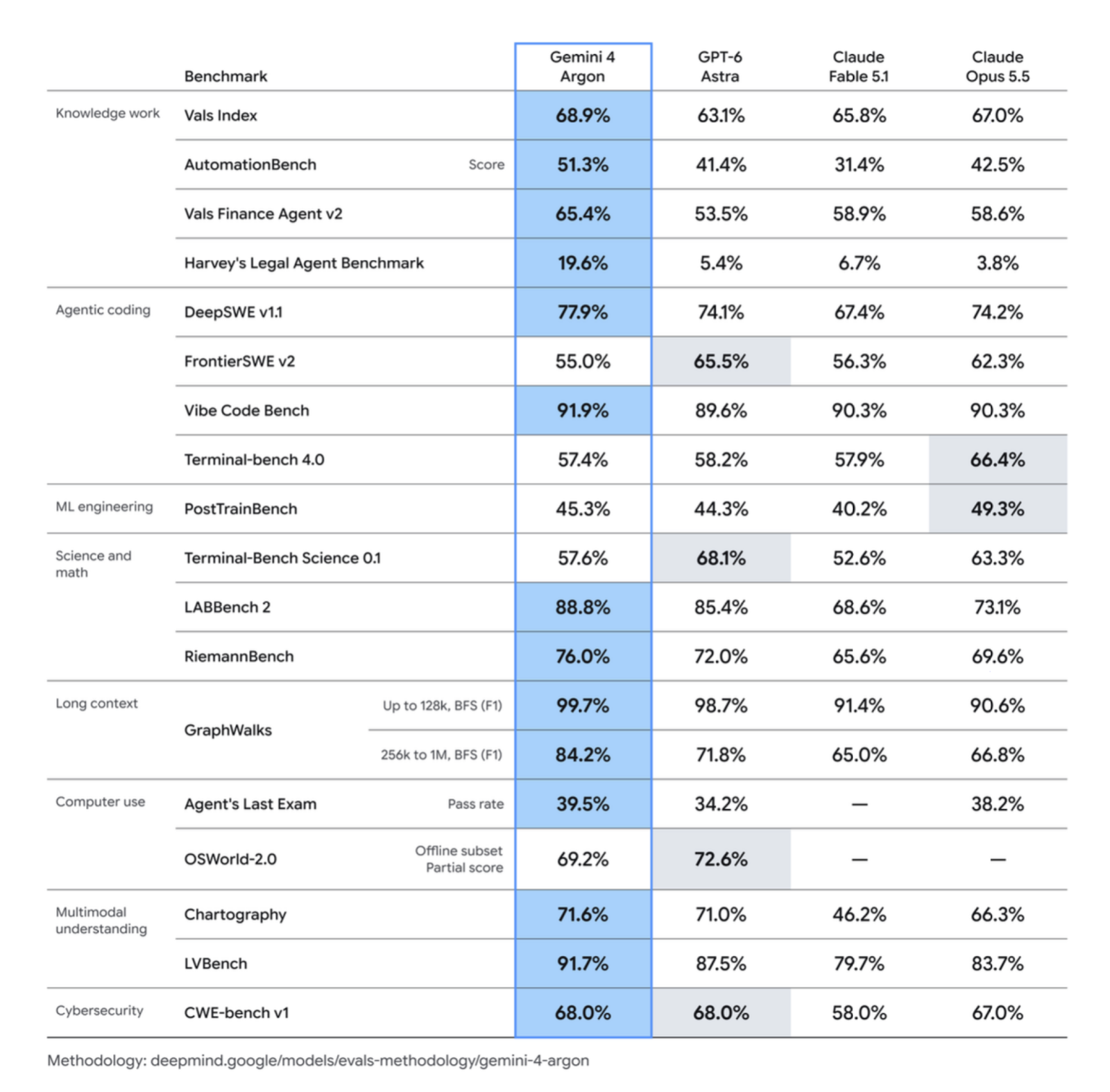
Argon excels in knowledge work, leading in areas such as finance, coding, legal, and tax work, according to Google’s Vals Index. In a test conducted by AutomationBench, Argon scored 51.3 percent in end-to-end business tasks, outperforming the next model by about nine points.
The coding outcomes vary, with Argon achieving a new high on DeepSWE v1.1 but falling behind GPT-6 Astra on FrontierSWE v2. Additionally, on Terminal-Bench 4.0, it lags behind all three competitors, with Opus 5.5 in the lead.
Google’s competitor figures differ from those reported by Anthropic. According to Mashable, Anthropic stated that GPT-6 Astra scored 57.9 percent on Terminal-Bench 4.0, whereas Google indicates 58.2 percent. Anthropic reported 58.7 percent for Opus 5.5 on the Terminal-Bench Science benchmark, while Google shows 63.3 percent. Anthropic cautioned that benchmark margins may not accurately reflect real-world distinctions when launching Opus 5.5.
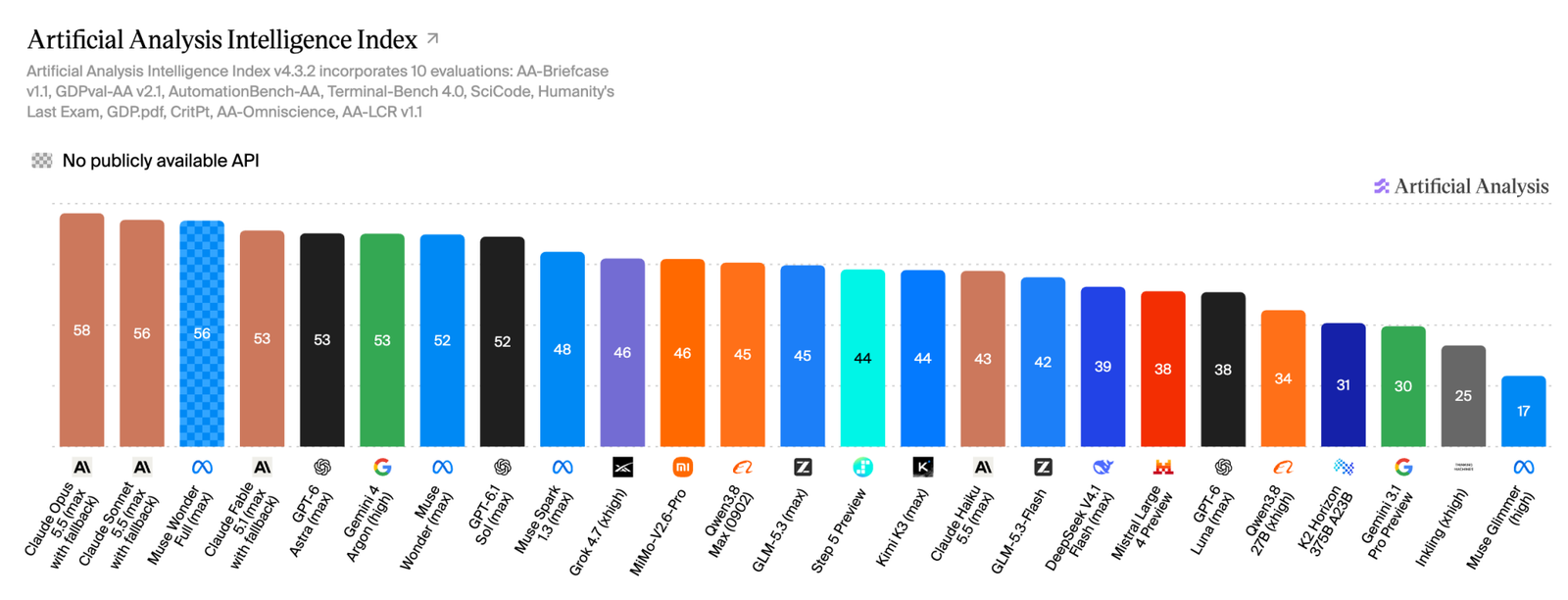
The Artificial Analysis Intelligence Index, separate from Google, has evaluated Argon’s “High” mode using a combination of 10 assessments in various fields to generate a composite score. The tests are conducted by Artificial Analysis on standardized hardware, ensuring objectivity without relying on companies’ own data.
- Google Gemini access is being updated. Free users should pay attention.
- Google’s latest super-intelligent AI, Gemini 4 Argon, is highly sought after by many.
- The initial five Googlebook laptops have arrived, featuring an operating system that combines Android and Gemini.
- Meta introduces Muse Wonder, surpassing OpenAI and Anthropic at the forefront.
Gemini 4 Argon (High) ranks significantly higher on the index with a score of 53, surpassing the median of 26 for similar models. Despite trailing behind top models like Claude and ChatGPT, Argon 4 shows a substantial improvement of 23 points compared to Google’s previous leading model, Gemini 3.1 Pro Preview.
Argon is priced at around $1.99 per Intelligence Index task during the initial offer, which is approximately 60% lower than GPT-6 Astra’s price. After the promotion, the price is expected to increase to $3.98, which is about 1.2 times the cost of Astra. In contrast, Opus 5.5 is priced at $5.98 per task.
Google Gemini 4 Argon: Ensuring safety and protection
Google introduced Argon gradually to different groups, beginning with cyber defenders, before making it available to consumers today. The company also took part in the U.S. government’s pre-release model access program.
Google states that the model is created to reject requests that could assist in cyberattacks or attacks involving chemicals, biological substances, radiation, or nuclear materials, with red teams testing these security measures.
Google states that Argon is its most resilient model to indirect prompt injection so far. According to Google’s findings on Gray Swan’s benchmark, which assesses a model’s susceptibility to malicious instructions hidden in content it processes, attacks were successful only 0.7 percent of the time against Argon. In comparison, the success rates were 1.0 percent for Opus 5.5 and Fable 5.1, and 8.5 percent for GPT-6 Astra. A lower success rate is preferable in this test.
You can locate the complete Gemini Argon 4 model specifications on the Google website.
Ziff Davis, the parent company of Mashable, sued OpenAI in April 2025, claiming that OpenAI violated Ziff Davis’ copyrights by using them to train and run its AI systems.
Subjects include Apps & Software, Artificial Intelligence, Google, and Google Gemini.

chsyys/GettyImages
Chance Townsend is the General Assignments Editor at Mashable, where he writes about technology, video games, dating apps, digital culture, and other topics. He holds a Master’s degree in Journalism from the University of North Texas and has contributed to publications such as PC Mag and Mother Jones.
He enjoys cooking, sleeping, and Detroit sports during his leisure time. For any advice or discussions about the Lions, you can contact him on Bluesky @offbrandchance.bsky.social, via email at [email protected], or on Signal at 224-417-6628.